

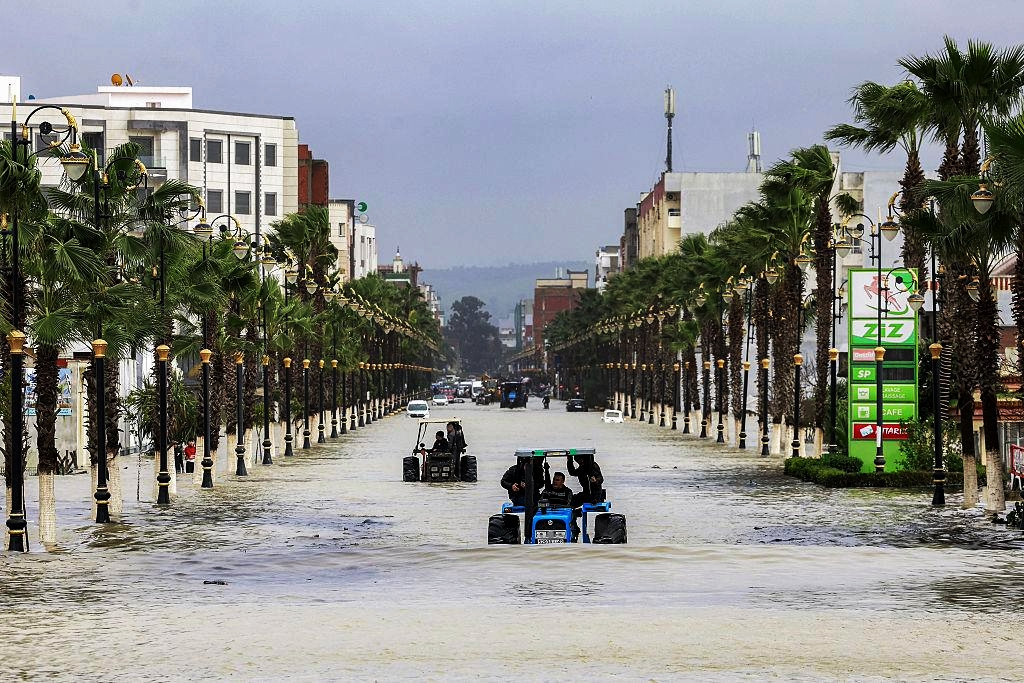
Morocco floods continue to impact northern regions as authorities respond to one of the most significant weather-related crises of the year.
As severe flooding affects several northern regions of Morocco, authorities have mobilized all available resources to respond to the situation, including the deployment of the Royal Armed Forces. Emergency teams, local officials and civil protection units have been operating on the ground for days, setting up shelters, reinforcing vulnerable areas and assisting affected residents.


Despite this large-scale mobilization, the official website of Morocco’s national weather agency has not published a new public communiqué since December 18, 2025.
As of February 7, 2026, this 51-day gap coincides with widespread flooding across northern Morocco and the evacuation of approximately 113,000 people in the Ksar El Kebir region alone, according to figures reported by Moroccan state broadcaster 2M.
We verified the official meteorological portal https://www.marocmeteo.ma on February 7. The website is operated by the Direction Générale de la Météorologie (DGM), which falls under the Ministry of Equipment and Water. At the time of verification, the most recent press communiqué available on the site remained dated December 18.
During the same period, heavy rainfall ranging between 60 and 100 millimeters affected Larache, Tetouan, Chefchaouen, Taounate and Al Hoceima. Several roads were disrupted or temporarily closed, including parts of the route linking Tetouan to Chefchaouen. Near Ksar El Kebir, the Loukkos River overflowed after days of intense rain, forcing evacuations and the relocation of residents to temporary shelters or family homes.
Moroccan authorities have taken extensive action in response to the floods. Military units have supported relief operations, while the Interior Ministry activated monitoring and emergency intervention systems. Local administrations have been coordinating with civil protection and health services to assist affected communities.
However, no dedicated flood-related communiqué has been published on the main public platform of the national meteorological authority during this period. The DGM’s forecasts are widely used by farmers, transport operators, airlines and tourism professionals, and form part of Morocco’s official weather communication.
We reviewed both the French and Arabic versions of the meteorological website:
The latest communiqué available on each version dates back to December 18 and relates to snowfall in the Atlas Mountains. No subsequent press releases addressing the flooding in northern regions were visible at the time of verification.
The website includes sections intended for disaster-affected areas and indicates that vigilance maps are updated twice daily. It remains unclear whether these updates have been accompanied by explanatory public statements addressing the ongoing flooding.
For travelers and members of the Moroccan diaspora abroad, particularly in Europe and North America, access to official weather information is an important factor when planning trips to northern regions. In the absence of updated communiqués on the national meteorological website, many have relied on local media and international coverage for current information.
Authorities continue to monitor the situation across northern Morocco as recovery operations remain ongoing. Weather conditions and infrastructure disruptions are expected to influence travel, agriculture and local economic activity in the coming weeks, according to regional media and official updates.
Sources
https://www.marocmeteo.ma
https://youtu.be/JkPQlTJZV8s?t=156
https://www.hespress.com
https://www.moroccoworldnews.com
https://www.france24.com